Paint Your Kitchen Cupboards Yourself or Get a Respray?
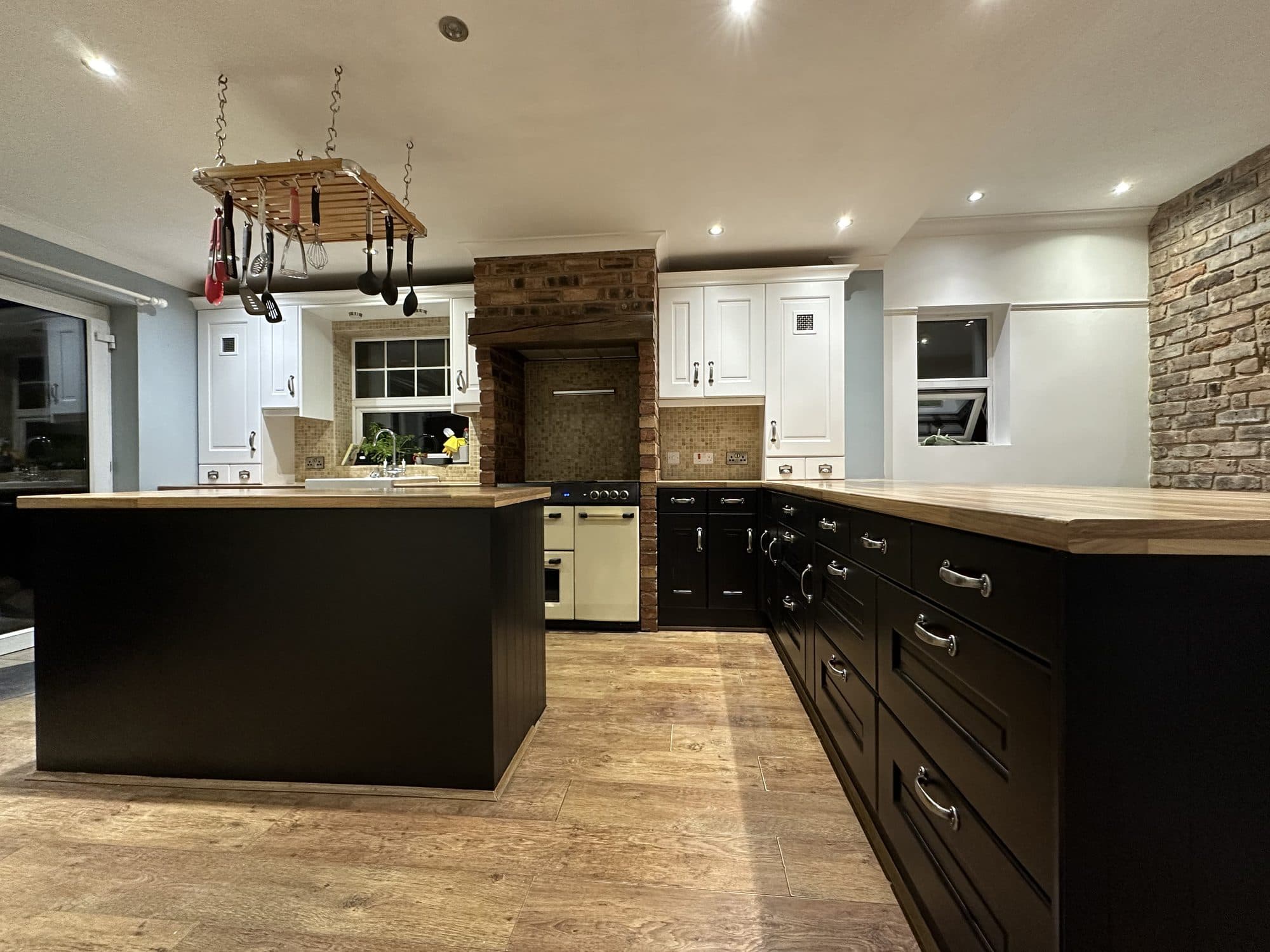
Yes, you can paint your kitchen cupboards yourself, and for some kitchens it is the right call. Whether it is the right call for yours depends on what the doors are made of, what condition they are in, and what finish you expect to live with afterwards.
We respray kitchens for a living, so you would expect us to say pay a professional. We do not say that to everyone. Some kitchens suit a tin of paint and a steady hand. Some will fight you all the way and still look like a DIY job at the end. This guide is about telling the two apart before you start.
When painting your own cupboards is a reasonable choice
Start with an honest look at the kitchen. DIY painting makes sense when the doors are painted MDF or solid wood in sound condition, with no loose finish, no swelling and no water damage around the sink. Those surfaces will take paint if they are cleaned and prepared properly.
It also makes sense when your expectation matches the method. Brush or roller texture is part of a hand-painted finish. If you like that look, or it will not bother you, a careful DIY job can be a perfectly good result. Hand painting has its place, and budget-led jobs with lower finish expectations are part of that place.
And it makes sense when the kitchen is a stopgap. If you plan to replace it before long, or you are a landlord making a rental presentable between tenants, a tidy coat of paint can be enough. We say the same about our own Standard respray: it suits houses that need to look clean and presentable rather than homes where the owner is staying long term.
The last test is you. Painting is the easy bit. Cleaning, degreasing, sanding and priming every door is the slow bit, and it is the bit people skip. If you will do all of it properly, you have a fair chance. If you are hoping to skip the preparation and paint straight over the doors, read the next section first.
| Door type | DIY painting | Professional respray |
|---|---|---|
| Painted MDF or solid wood, sound | A fair choice if you prepare it properly and accept brush or roller texture | Sprayed finish after cleaning, sanding and priming, in place or in the workshop |
| Melamine or laminate | Risky; a smooth surface that ordinary paint struggles to grip | Preparation and coating route set for the surface after a condition check |
| Vinyl-wrapped, sound and tight | Not a good brush job; the skin needs the right preparation first | Checked first; vinyl doors go the Premium workshop route |
| Vinyl-wrapped, lifting or peeling | Do not paint over it; loose vinyl takes the paint with it | Stripped carefully in the workshop so the MDF is not torn, then refinished on the Premium route |
| Swollen, blown or water-affected | Paint will not fix it | Assessed first; repair or replacement, or honest advice not to respray at all |
Where DIY painting goes wrong
Preparation. Grease left on a door stops the paint bonding. Loose old finish under a new coat keeps lifting and takes the new coat with it. A chip painted over instead of filled is still a chip, and it is now the weakest point on the door. None of that shows on the day you finish. It shows later, around the handles, the cooker and the sink, where the doors get touched and wiped the most.
Texture. Brush and roller paint goes on in a layer you can see and feel. Marks follow the brush, roller stipple sits on flat panels, and paint builds up in the grooves and mouldings of a profiled door. Some people are fine with that. Others only realise they are not once the whole kitchen is done and the light hits it.
Living with it. A kitchen being painted by hand is a kitchen you cannot properly use. Doors are off or wet, cupboards are open, worktops are covered. The work gets done in the gaps around normal life, and a half-finished kitchen with no doors on is hard to live with. That is not a reason not to do it. It is a reason to be honest with yourself before you start.
The wrong surface. Painted MDF, solid wood, melamine, laminate and vinyl-wrapped doors do not all need the same preparation, and a tin of cupboard paint does not know which one it is going on. Get the door type wrong and the best preparation in the world will not save the job. That is the next section.
The doors decide: what your cupboards are made of
Before you buy anything, work out what the doors are. Painted MDF and solid wood are the fair DIY cases, provided the existing finish is sound and the doors are not swollen or water-affected. They can be cleaned, sanded and primed and they will take paint. The finish then comes down to your preparation and your method.
Melamine and laminate are hard, smooth and non-porous. Ordinary paint has very little to grip. It can be done, but it needs the right preparation and the right coating for the surface, and choosing the wrong route for a surface like this is one of the ways a finish fails. This is the door type that catches people out.
Vinyl-wrapped doors need the most care. Even when the vinyl is sound, it is a smooth skin that needs the right preparation before anything will stay on it. If it is lifting at the edges or bubbling near the oven, painting over it is not a fix. The loose vinyl keeps moving and takes the paint with it. Failed vinyl has to be stripped carefully so it does not tear the MDF underneath, and that is workshop work, not a job for the kitchen table. There is more in our guide to vinyl-wrapped kitchens peeling.
Damaged doors are a question of degree. Chips, dents, scrapes and damaged edges can often be assessed for repair. Doors that are swollen, blown at the edges or water-affected are a different matter. Damaged, unstable or water-affected doors may need repair or replacement rather than a simple respray, and that applies to a tin of paint just as much as it applies to us.
What a professional respray changes
A professional respray is not a better tin of paint. The difference is the preparation, the application and the handling. We check condition first: what the surfaces are made from, how stable the existing finish is and whether repairs are needed. Cleaning, sanding, priming and coating choices are confirmed for the kitchen rather than assumed. That check is the part that is easiest to skip at home, and it is the part that decides the result.
The application is sprayed, with professional wood-finishing coating rather than normal brush or roller paint. Spraying lays the coating on without brush marks or roller stipple, so a sprayed door looks and feels different from a brushed one. It also shows problems rather than hiding them, which is why it only works on top of proper preparation. The full comparison between the two professional finishes is in sprayed vs hand-painted kitchen.
The route fits the kitchen. On a Standard respray the kitchen is masked and sprayed in place. On a Premium respray the doors and drawer fronts come off their hinges and go to our unit in Denton, where each one is cleaned, degreased and sanded, repaired and filled where needed, then primed and refinished. The carcasses stay put and the fixed sections, end panels, cornices, leading edges and the permanent framework, are sprayed at the property. Which route suits you is covered in Standard vs Premium kitchen respray.
The kitchen is masked before any spraying starts, and the condition of the doors is checked first rather than assumed. Damaged doors go to someone who repairs them for a living. If a door is too far gone, you are told before the work starts, not left to find out after the paint is on. What the work involves is set out on our kitchen respray page.
When neither is the answer
There are kitchens we tell people not to respray, and the same advice applies to painting them yourself. If the layout is wrong, paint will not move a unit. If the carcasses are failing, a fresh colour on the doors sits on a box that is giving up. If the doors are water-affected and unstable, swelling at the bottom edges or coming apart at the corners, the finish has nothing solid to hold on to.
In those cases full replacement is the better route, and your own effort or a professional's fee on a finish that is going to fail is wasted either way. Many kitchen doors are in better condition than homeowners expect, so do not assume yours is one of these. If you suspect it might be, read when is a kitchen too damaged to respray before you buy a brush or book anyone.
Cost and lifespan, briefly
Price is the obvious reason people pick up a brush, and it is a fair one. We publish what a respray costs rather than making you guess, and the guide explains what you are paying for: the preparation, the process and the finish, not just a number. My view is simple: compare the process and the result, not just the headline figure. It is all in the kitchen respray cost guide.
Standard respray from £999 (up to 10 doors and drawer fronts, no vinyl wrap). Premium workshop respray from £1,500. Bryan confirms a fixed price from photos.
On lifespan, the honest answer is the same for both routes. Any painted finish can be chipped or scratched by an impact, sprayed or brushed, and how long it lasts depends on the door condition, the preparation, the coating system, everyday use and cleaning. The difference is how much of that each route controls. We go through it in how long does a kitchen respray last.
What to send for a straight answer
If you are on the fence, do not guess. Send us photos and we will tell you what the doors are, whether they will take paint, and which route makes sense. Send:
- A wide photo of the full kitchen from each angle.
- Close-ups of a few representative doors and drawer fronts, including the edges.
- Anything that worries you: peeling vinyl, chips, swelling, cracks or old repairs.
- The sink run and the cooker area, where doors take the most punishment.
- The current handles and the hole positions, if you are thinking of changing them.
If the kitchen suits a DIY paint job, we will say so. We would rather you do it yourself and do it well than pay for a respray that was not the right call, or paint over something that should have gone to the workshop. If it needs a professional, read what that involves on our kitchen respray page, request a quote with your photos, or call or WhatsApp Bryan on 07384 574225. You get a straight answer either way.
Ready for a free quote?
Take our quiz at revitalizeresprays.co.uk/quote.
Or call Bryan directly on 07384 574225 — straight through to the workshop, no call centre, no chasing.
Revitalize Resprays — Unit 1a, 88-90 Wilton Street, Denton, Manchester M34 3NH. 25+ years wood-finishing experience, Google reviews from real local customers, as featured in The Times.
Frequently asked questions
Can you paint kitchen cupboards yourself?
Yes, if the doors are painted MDF or solid wood in sound condition and you are prepared to clean, sand and prime properly before any paint goes on. You will get a brushed or rolled finish rather than a sprayed one, so the result depends on your preparation and on whether you are happy with that texture.
What are the downsides of painting kitchen cabinets?
Skipped preparation shows later as chipping, peeling and wear around the handles, the cooker and the sink. Brush and roller texture is visible, and the kitchen is out of action while the work is done. Some door materials, especially laminate and vinyl, give ordinary paint very little to grip.
Can you paint over vinyl or laminate cupboard doors?
Ordinary paint struggles on both, and painting over vinyl that is lifting is not a fix. Loose vinyl keeps moving and takes the paint with it, so it has to be stripped carefully without tearing the MDF underneath, which is workshop work. Sound laminate and melamine need the right preparation and coating before anything will stay on them.
Which kitchen cupboards should not be painted?
Doors that are water-affected, swollen or coming apart, and kitchens where the carcasses are failing. Paint will not fix structural damage, and if the layout is wrong a new colour will not change that. Those kitchens need repair or replacement rather than paint, whether from you or from us. Peeling vinyl is different: it is not a brush-over job, but it can often be stripped carefully in the workshop and refinished, depending on the substrate and the extent of the damage.
Is a professional respray worth it over DIY?
It depends on the kitchen and on what you want to live with. If the doors are sound and you are happy with a hand-painted look, DIY can be a fair choice. If you want a sprayed finish without brush marks, have laminate or vinyl doors, or have damage that needs repairing, a professional respray does the parts that are hardest to get right at home.
Related reading

Bryan Grime
Founder, Revitalize Resprays
More from the blog
Sprayed vs hand-painted kitchen: the real difference
The difference between a sprayed and a hand-painted kitchen: preparation, application and how the finish looks close up. Plain advice from Manchester.
Kitchen ResprayingKitchen Respray Cost: What Actually Decides Your Quote
How much does it cost to respray kitchen cabinets in the UK? What moves a quote up or down, in-situ vs workshop, and what to send for a fixed price.
Kitchen ResprayingHow long does a kitchen respray last? An honest answer
No single number is honest. What actually decides how long a sprayed kitchen lasts, why finishes fail early, and what to send for a straight answer.
Kitchen ResprayingVinyl-Wrapped Kitchens: Why They Peel and What Actually Fixes It (2026)
Vinyl-wrapped kitchen doors peel. Here's why it happens and why most quick fixes make it worse — from a Manchester sprayer.