Kitchen Respray or Replacement: Which Fits Your Kitchen?
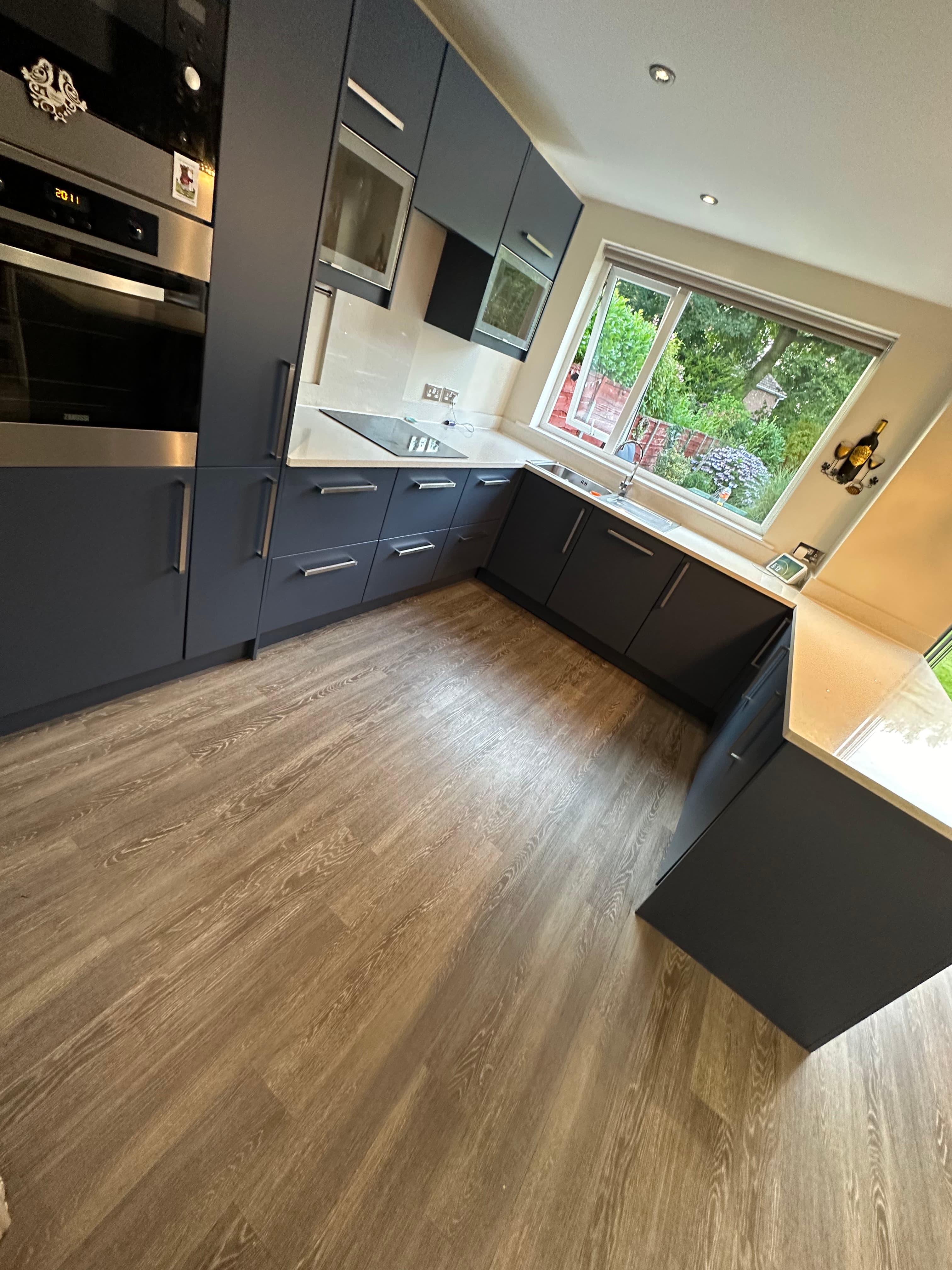
A dated kitchen does not always need replacing, but a respray is not the right answer for every room either. The decision starts with what is already there: layout, storage, carcasses, doors, edges and the condition of the existing finish.
This guide keeps that decision separate from headline prices and lifespan claims. Those questions have their own guides. Here, the job is to work out whether the existing kitchen is worth keeping.
Start with the kitchen, not a headline price
Price matters, but it cannot tell you whether the room is a sensible respray candidate. A lower quote does not repair failed carcasses, and a replacement quote does not prove that sound units need ripping out.
Walk around the kitchen and check the practical questions first:
- Does the current layout work for cooking, storage and movement?
- Are the cabinet boxes solid, square and free from serious water damage?
- Are the doors stable, or are edges swollen, split or badly damaged?
- Do you want a new colour and finish, or a different door style?
- Do appliances, worktops, sinks or storage positions need to move?
- Is the existing coating stable, peeling or hiding a previous repair?
These checks do not replace an assessment, but they stop the decision being reduced to a sales headline.
When a respray is worth assessing
A respray is worth assessing when the kitchen works as a room and the underlying units are suitable to keep. The strongest candidates usually need a visual change rather than a new floor plan.
- The layout and storage already suit the household.
- The carcasses are sound and securely fitted.
- The doors and drawer fronts can be prepared without hiding structural damage.
- The main aim is a different colour, sheen or overall appearance.
- The fixed panels, plinths and visible framework can be assessed as part of one finish route.
Suitability still depends on the material and its condition. Painted MDF, timber, laminate and vinyl wrapped doors do not all follow the same preparation route. Peeling vinyl, swollen edges and unstable previous paint need close inspection rather than a blanket yes.
When replacement is the more honest route
Paint changes a finish. It does not redesign a kitchen or make failed cabinets sound. Replacement deserves a proper look when:
- The layout causes daily problems and needs moving.
- Several carcasses are swollen, rotten, loose or structurally damaged.
- The project needs different cabinet sizes or substantially more storage.
- Appliances, plumbing or electrical positions need major changes.
- The preferred result needs a different door construction or style.
- Previous coatings or repairs have left too little stable material to prepare.
A photo assessment may show that only part of the kitchen is affected. It may also show that a respray would avoid the real problem. The useful answer is the one that matches the condition, even when that answer is not a respray.
The middle ground: repair, replacement parts and refinishing
The choice is not always a full respray or a full rip out. A sound kitchen can sometimes be kept while unsuitable doors, damaged panels, handles or worktops are dealt with separately. Whether that approach will give a consistent result depends on matching, construction and the finish route.
Do not assume a replacement part will match just because the colour name is the same. Send the full scope so Bryan can assess the kitchen as one project rather than treating each visible problem in isolation.
What to photograph before you decide
Good photos make the first assessment more useful. Send:
- A wide view from each side of the room.
- Close photos of representative doors and drawer fronts.
- The sink run, cooker area and any places exposed to heat or moisture.
- Peeling vinyl, swollen edges, cracks, chips and previous repairs.
- The current handles and hole positions.
- The inside or back of a door where practical.
Use the quote form to send the kitchen as it is. The purpose of the first review is to check suitability and identify what still needs clarifying, not to force every kitchen into the same route.
Keep cost and longevity questions with their proper owners
If the kitchen looks suitable to keep, the next question is what affects the quote. Door count, substrate, condition, preparation, colour detail and the finishing route all matter. Read the kitchen respray quote factors guide for that assessment.
Questions about wear, care and how condition affects a finish belong in the kitchen finish longevity guide. Keeping those subjects separate makes it easier to update each answer against the right evidence.
Frequently asked questions
Is a tired kitchen automatically ready for replacement?
No. Appearance alone does not settle the decision. The layout, carcasses, doors, edges, previous coatings and any water damage all need checking first.
What can a respray change?
A respray can change the colour and finish of suitable existing doors, drawer fronts, panels and fixed framework. It does not change the room layout, cabinet sizes or storage plan.
When should I look at replacement instead?
Replacement deserves a proper look when the layout does not work, the carcasses are structurally unsound, widespread water damage is present, or the project needs different storage, door styles or appliance positions.
Can photos help with the first assessment?
Yes. Wide room views and close photos of doors, edges, sink areas, peeling finishes, swelling and previous repairs help Bryan judge whether a respray is worth assessing further.
Send clear photos for an assessment
Show the full kitchen and any damage, peeling, swelling or previous repairs. Bryan can then check whether a respray is worth assessing further and what details are still needed.
Start a quote requestRelated reading

Bryan Grime
Founder, Revitalize Resprays