Just Bought a House With a Dated Kitchen in Manchester? What To Do First
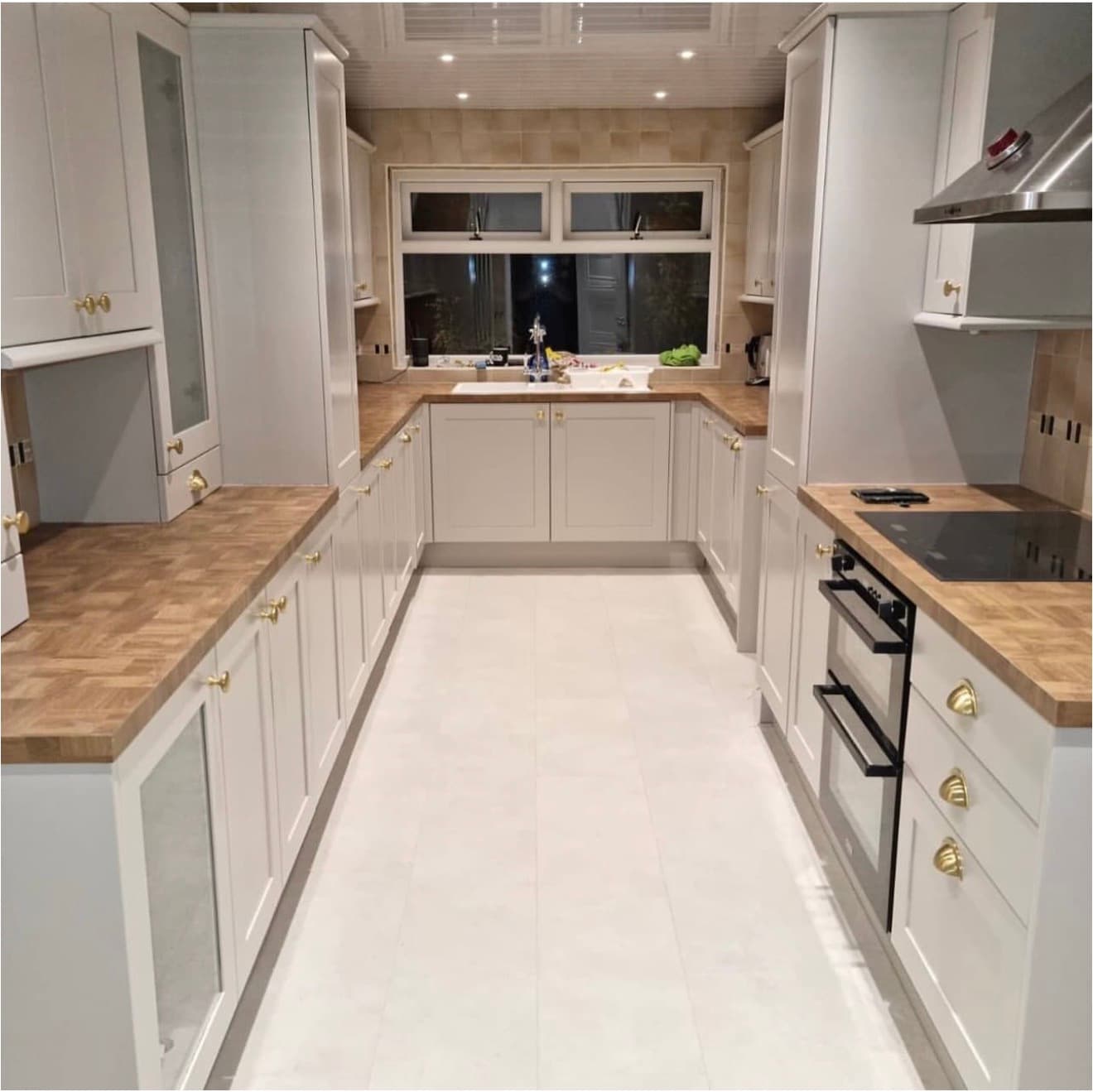
If you have just bought a house in Manchester, Stockport, Tameside, Cheshire or the North West and inherited a dated kitchen, do not rush into ripping it out until you know what is actually wrong with it.
Bryan's first question is not, “How old is it?” It is whether the bones are still good: solid carcasses, a layout that works, doors that can be made stable, and damage that is cosmetic rather than structural.
Quick answer: what should you do first?
Before you price a new kitchen, check whether the existing kitchen is actually failed or just unfashionable. Cream doors that have yellowed, dark wood, older gloss, tired shaker styles and dated handles can make a room feel old even when the structure underneath is still usable.
That is the difference between a kitchen that needs replacing and a kitchen that needs proper refurbishment. If the structure is sound, changing the finish can often be the quickest way to make a newly bought house feel like yours.
What Bryan checks before recommending anything
A respray decision should be condition-first. The brand and age of the kitchen are only clues. Revitalize checks the parts that decide whether a professional finish has a proper base to bond to.
- Are the carcasses solid and worth keeping?
- Does the layout work for how you want to live in the house?
- Do the doors and drawer fronts sit properly?
- Are the edges stable, or have they blown and swollen?
- Is there water damage around sinks, dishwashers, kettles or bins?
- Is any vinyl, foil or paper veneer lifting or failing?
- Has shaker trim split, swollen or broken away from the door?
If those checks are mostly positive, a respray may be a sensible first upgrade. If they are not, the answer may be replacement doors, deeper repair work, or not spending money on that kitchen yet.
When a dated kitchen is worth saving
The best candidates are kitchens where the layout, storage and carcasses already work. Many Howdens and Wren kitchens fall into this category, but Wickes, Magnet, B&Q and IKEA kitchens can also be worth assessing when the substrate and condition are right.
This is where respraying makes commercial sense. You are not paying to fix a broken kitchen. You are modernising something that still has useful life left in it.
Bryan's source-bank view is simple: a lot of customers do not need a new kitchen. They need the doors taking back properly, repairing, preparing and refinishing with the right process.
Red flags before you spend money
Some kitchens look tired but are sound. Others look acceptable from a distance but have failed underneath. The main red flags are not style problems. They are substrate problems.
- Badly swollen MDF around door edges or corners.
- Blown edges where the material has expanded or split.
- Shaker-style trim that has swollen, cracked or lifted away.
- Vinyl wrap, foil or paper veneer peeling across multiple doors.
- Water damage around sink, dishwasher, kettle and wet zones.
- Doors that are warped, soft, crumbling or no longer sitting correctly.
Those issues do not always mean a full new kitchen. They do mean the job needs honest assessment before anyone promises a perfect sprayed finish.
Respray, replacement doors or full new kitchen?
Think in three levels. If the kitchen is stable and mainly dated, a respray can be the cleanest route. If several doors have failed but the carcasses and layout are good, replacement doors plus a professional respray can be more honest than painting over bad material. If the layout, carcasses and doors are all wrong, replacement may be the better long-term decision.
Revitalize's job is to stop homeowners self-diagnosing from one photo or a brand name. A tired kitchen can be a strong candidate. A newer kitchen with blown edges may not be.
Cost guide for a dated kitchen respray
Revitalize's locked public kitchen price bands are £999–£1,500 for a Standard respray and £1,650–£3,500 for a Premium workshop-based respray.
Standard is usually suited to a quicker in-situ refresh. Premium is the deeper workshop route where doors are removed, prepared and sprayed over a 3–5 day process. The right route depends on door count, panels, islands, condition, repairs and the finish you want.
For a newly bought house, the question is value. If the layout works and the structure is solid, a respray may free up budget for flooring, appliances, decorating or other first-year jobs without leaving the kitchen looking tired.
Photos to send before deciding
The fastest next step is to send clear photos before booking anything. From photos, Revitalize can usually identify whether the kitchen is in good enough condition to spray, what level of preparation it needs, and whether any doors may need repairing or replacing first.
- Two or three full-room photos from different angles.
- Close-ups of doors, drawer fronts, edges and corners.
- Sink, dishwasher, kettle and high-use wet-area close-ups.
- Any peeling vinyl, failed foil, swollen MDF or split shaker trim.
- End panels, islands, plinths, handles and hinges if relevant.
That gives Bryan enough to point you toward the right route: respray, repair, replacement doors, or leave it alone until a bigger renovation makes sense.
Ready for a free quote?
Take our 30-second quiz at revitalizeresprays.co.uk/quote — upload a few photos of your kitchen and we'll come back to you within 24 hours with a fixed price.
Or call Bryan directly on 07384 574225 — straight through to the workshop, no call centre, no chasing.
Revitalize Resprays — Unit 1a, 88-90 Wilton Street, Denton, Manchester M34 3NH. 25+ years wood-finishing experience, Google reviews from real local customers, as featured in The Times.
Frequently asked questions
I have just bought a house with a dated kitchen. Should I replace it straight away?
Not always. If the carcasses are solid, the layout works and the doors are stable, a professional respray may modernise the kitchen without the cost, mess and delay of a full replacement.
What makes an old kitchen a good respray candidate?
A good candidate usually has strong carcasses, a layout you still like, doors that sit properly, stable edges, and mainly cosmetic wear such as tired colour, dated gloss, dark wood or yellowed cream.
When should I avoid respraying a dated kitchen?
Avoid treating it as a straightforward respray if the door substrate has failed: swollen MDF, blown edges, badly peeling vinyl or foil, split shaker trim, water damage, or doors that are warped, soft or not sitting correctly.
How much does it cost to respray a dated kitchen after moving house?
Revitalize's Standard respray is usually £999–£1,500. Premium workshop-based resprays are usually £1,650–£3,500. The final quote depends on door count, panels, condition, repairs and finish choice.
What photos should I send before asking for a quote?
Send full-room photos, close-ups of doors and edges, wet areas around the sink and dishwasher, any peeling vinyl or foil, swollen MDF, shaker trim, end panels, islands, handles and hinges.
Related reading

Bryan Grime
Founder, Revitalize Resprays
More from the blog
Kitchen Respray or Replacement: Which Fits Your Kitchen?
Compare a kitchen respray with replacement by checking layout, storage, carcass condition, door damage, appliance changes and the finish you want.
Kitchen ResprayingWhen Is a Kitchen Too Damaged to Respray? Honest Warning Signs
Find out when a damaged kitchen can still be resprayed, when replacement doors are more honest, and what photos Revitalize needs before quoting.
Kitchen ResprayingWhich Kitchen Brands Can Be Resprayed? Howdens, Wren, B&Q, IKEA, Wickes & Magnet
Find out which kitchen brands respray well, including Howdens, Wren, B&Q, IKEA, Wickes and Magnet, and when vinyl, foil or swollen MDF means replacement doors are better.
Kitchen ResprayingStandard vs Premium Kitchen Respray: Which Is Right for You?
Compare Revitalize's Standard and Premium kitchen respray options: who each service is for, how the workshop process works, typical prices, durability and finish quality.