Spray Finishing vs Hand Painting for Commercial Joinery
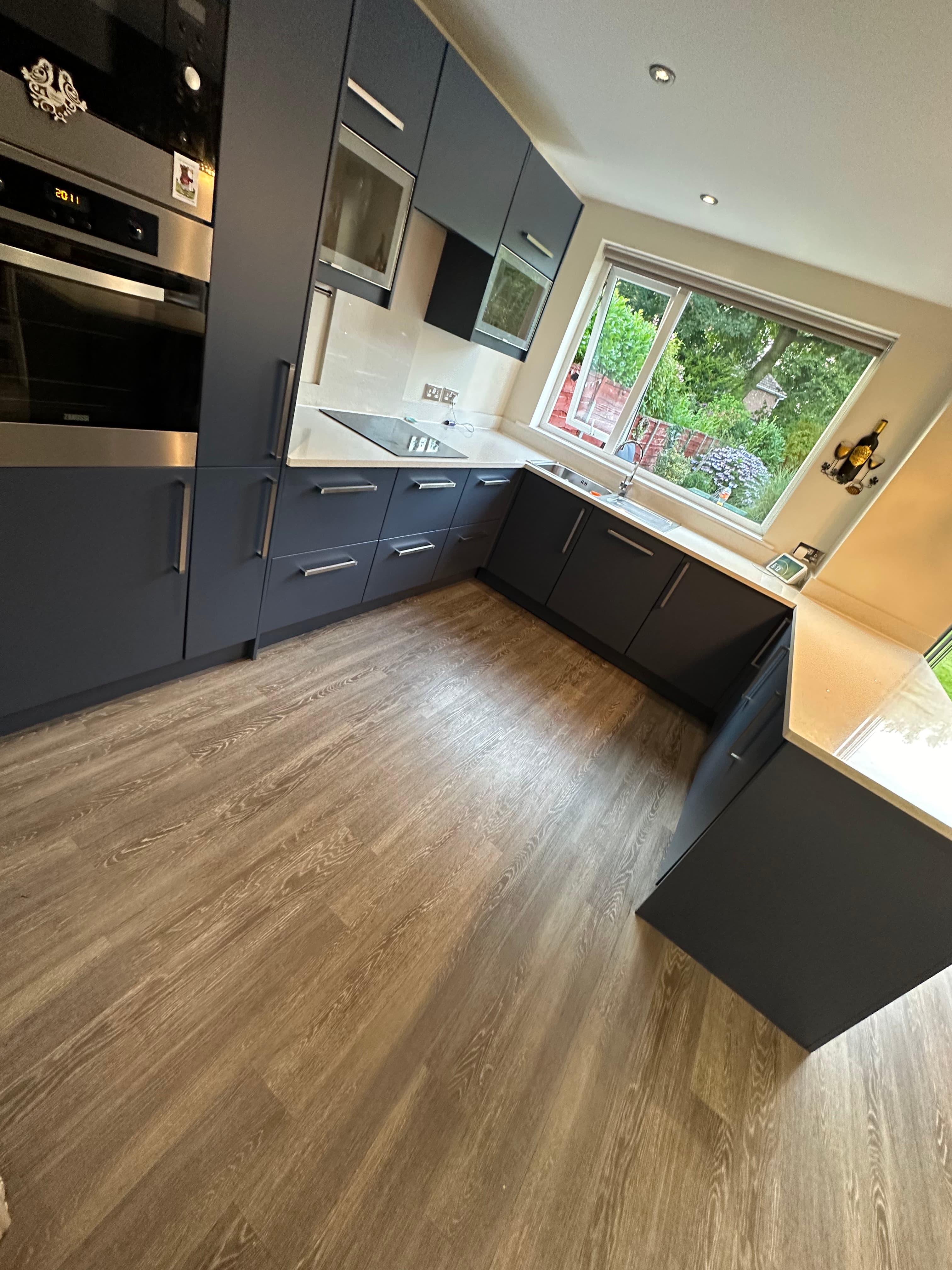
For commercial joinery, the finish is not a cosmetic afterthought. It is the part the client sees, touches and judges. A brilliant piece of fitted furniture, shopfitting or MDF work can still feel wrong if the finish is brush-marked, inconsistent or rushed at the end of the job.
Revitalize Resprays works from Denton, Manchester, and can discuss suitable commercial spray finishing, MDF spraying, joinery coatings, lacquering, staining and overflow finishing support for joiners, cabinet makers, fitted furniture companies and shopfitters across Greater Manchester and the North West.
Quick answer: should commercial joinery be spray finished or hand painted?
If the work involves fitted furniture, MDF panels, wardrobe doors, media walls, shopfitting components, counters, reception desks or a batch of repeat parts, spray finishing is usually the route worth discussing. It is built for consistency across faces, edges and multiple components.
Hand painting can still be useful in the right place: small decorative areas, on-site touch-ups, repair work, areas where brush texture is acceptable, or jobs where the finish standard does not justify a sprayed process. The mistake is treating both routes as the same service.
The real difference is process, control and consistency
Spray finishing is not just “paint through a machine”. The value is in the preparation, controlled application, handling, drying, finish target and the ability to repeat the same look across more than one item. That matters when several doors, panels or shopfitting parts have to look like they belong together.
Hand painting depends heavily on access, brush or roller marks, site conditions and the amount of time available between coats. Sometimes that is perfectly acceptable. On client-facing commercial joinery, it can also be the difference between “finished” and “professionally finished”.
Bryan's practical rule is to judge the job before promising the route. MDF, oak, veneer, timber, previously coated components and fitted furniture parts do not all behave the same. The substrate and expected finish decide the sensible process.
When spray finishing is the better route
Spray finishing is usually worth discussing when the work needs one or more of these outcomes:
- A smoother finish than brush or roller application can normally give.
- Consistency across multiple doors, panels, units or shopfitting parts.
- A specific colour, sheen, lacquer, stain or sample approval standard.
- Fitted furniture, wardrobes, media walls, counters or reception desks.
- MDF, veneer, oak, timber or previously coated joinery that needs a proper finishing route.
- Overflow support where a joiner needs a finishing partner, not another site painter.
It is especially relevant where the end client will judge the job close up: kitchen and bedroom doors, display cabinetry, counters, retail units, reception areas and fitted furniture that sits at eye level every day.
When hand painting may still be the sensible answer
This is not an attack on hand painting. It has its place. If the work is a small site touch-up, a decorative area where brush texture is acceptable, a repair to an existing hand-painted finish, or a budget-led job with low finish expectations, hand painting may be the honest route.
The issue is expectation. A client who wants a premium, consistent sprayed appearance on new fitted joinery should not be sold a quick hand-painted finish as if it is the same thing. That usually creates disappointment at the end of the job, when the deadline is tight and the joiner's reputation is on the line.
What trade buyers should send before asking for a route
The fastest way to decide between spray finishing, sample panel, lacquer, stain or another route is to send the facts first. A vague “can you finish this?” message usually leads to more questions.
- Photos, drawings or sketches of the parts.
- Quantities and approximate sizes.
- The substrate: MDF, oak, veneer, timber, existing coating or other material.
- Edge and profile details, especially exposed MDF edges, routed profiles or joins.
- Whether parts are loose, fitted, collected, delivered or still being made.
- Colour, colour match, sheen, lacquer, stain or sample requirement.
- The deadline, handover date and any client approval stage.
- Whether this is a sample, one-off batch or possible repeat overflow job.
Revitalize can then give a practical view on whether the job is suitable, what information is missing and whether a sample door or panel should come before a full batch.
Mistakes that cause problems on commercial finishing jobs
- Choosing the finish route only on price, without checking the expected standard.
- Leaving colour, sheen, lacquer or stain decisions until the deadline is close.
- Sending photos of faces only and hiding the edges, profiles or damage.
- Assuming raw MDF, veneer, oak and previously coated parts all need the same route.
- Promising the end client a sprayed look before confirming the finishing process.
- Only asking for overflow help after the handover date is already under pressure.
Good commercial finishing protects the whole chain: the joiner, the installer, the contractor and the end client. Bryan would rather be honest early than promise a route that puts that chain at risk.
Ready for a free quote?
Take our quiz at revitalizeresprays.co.uk/quote.
Or call Bryan directly on 07384 574225 — straight through to the workshop, no call centre, no chasing.
Revitalize Resprays — Unit 1a, 88-90 Wilton Street, Denton, Manchester M34 3NH. 25+ years wood-finishing experience, Google reviews from real local customers, as featured in The Times.
Frequently asked questions
Is spray finishing better than hand painting for commercial joinery?
For fitted furniture, shopfitting parts, MDF panels, doors, counters and repeat joinery components, spray finishing is usually the better route when the client expects a smooth, consistent finish. Hand painting may still suit small touch-ups, decorative site work or lower-finish areas where a sprayed finish is not required.
What commercial joinery can Revitalize look at spray finishing?
Suitable enquiries may include MDF wardrobe doors, media wall panels, fitted furniture parts, shopfitting components, retail display units, reception desks, counters, veneer, oak, lacquer, stain and sprayed joinery finishes.
What should a joiner send before choosing spray finishing?
Send photos or drawings, quantities, sizes, substrate, edge/profile details, whether parts are loose or installed, colour or finish requirement, sheen, lacquer or stain requirement, deadline and whether the work is a sample, one-off batch or repeat overflow job.
Can Revitalize help joiners with overflow spray finishing?
Yes, where the job is a suitable fit. Bryan needs the project details first so he can be honest about substrate, finish route, quantities and deadline before anyone relies on Revitalize for a client handover.
Related reading

Bryan Grime
Founder, Revitalize Resprays
More from the blog
What Information to Send for a Trade Spray Finishing Quote
A practical quote checklist for joiners, shopfitters, fitted furniture companies and trade buyers who need MDF, lacquer, stain or sprayed joinery finishing.
Commercial Spray FinishingHow Joiners Can Use Revitalize as an Overflow Spray Finishing Partner
A practical guide for joiners, cabinet makers, fitted furniture companies and shopfitters who need overflow spray finishing support in Manchester and the North West.
Commercial Spray FinishingMDF Spraying for Joiners in Manchester: What to Send First
A practical guide for joiners, cabinet makers, fitted furniture companies and shopfitters who need MDF spraying, sample panels or trade finishing support in Manchester.